
Home Learning
Following valuable feedback from our Parent Homework Survey and insights from educational research (Education Endowment Foundation), we have updated our approach to focus on quality over quantity—making home learning fun, manageable, engaging, and directly connected to what pupils are learning in class.
Please take a moment to review our attached overview and guide below.
Key Highlights of Our Home Learning Approach
- Focus on Core Skills: Weekly tasks will focus on building confidence in Literacy, Reading, and Numeracy/Maths.
- Stage-Appropriate Delivery:
- P1–P5: Tasks are issued via traditional bag drop folders each week.
- P6–P7: Tasks are issued digitally via Google Classroom using pupils' 1:1 Connected Falkirk iPads to help build independent organisation and digital skills for high school.
- Optional Creative Challenges: Optional cross-curricular projects and competitions will be shared throughout the year for learners who wish to extend their learning creatively.

|
Home Learning at Carron - Parent Overview | [pdf 1MB] |

|
|
|
Home Learning at Carron - Parent Guide | [pdf 1MB] |
|
How Can I Support My Child's Learning in Literacy?
Parentzone Scotland’s supporting languages at home section has simple ideas to support your child in learning about literacy through everyday activities.
|
|
CfE Languages - In a Nutshell | [pdf 399KB] |
|
Parentzone Scotland’s supporting literacy at home section has simple ideas to support your child in learning about literacy through everyday activities.
Oxford Owl is a great place to find out what your child is learning in English and what you can do to help at home. Get some fresh ideas for practising the weekly spelling words, check out some ways to improve your child’s vocabulary and learn how to put it all together with different writing ideas. There’s also a handy glossary of useful words to help you work out your grammar and punctuation terms. (Please note some information does not apply to Scotland's Curriculum for Excellence)
There is more to learning to read than seeing a word on a page and saying it out loud. We need to understand what we read as well. We can think about learning to read as having two branches:
- Phonics – the mechanics of reading
- Comprehension – reading for understanding
Find out more about these two areas and how they are taught to your child in school with Oxford Owl. They offer some helpful information to support Reading at Home including: phonics and word reading; letters and sounds; comprehension; common reading issues (struggling readers, reluctant readersand encouraging boys) and reading for pleasure.
Parent's Recommend:
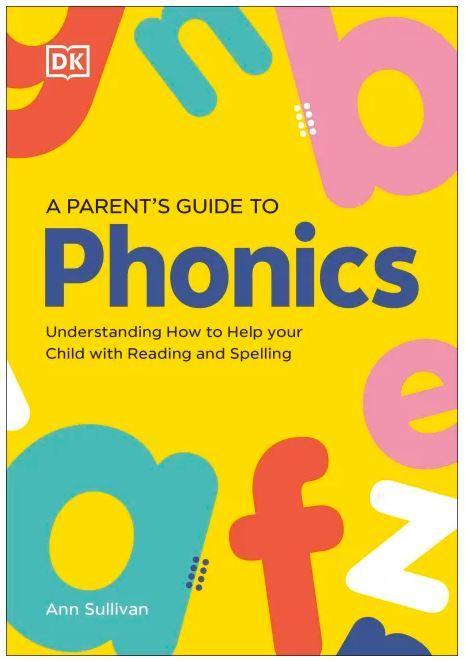
Phonics Explained - A Guide to Phonics for Parents/Carers - YouTube
How Can I Support My Child's Learning in Numeracy & Mathematics?
Parentzone Scotland’s supporting numeracy at home section has simple ideas to support your child in learning about numeracy through everyday activities.
For many of us, it’s been a long time since we were at school and learning about maths. Sometimes that can mean your child is learning things in new ways, with different names, or even things you’ve completely forgotten how to do. Oxford Owl have brought together a collection of the key Maths Skills your child will come across: number and place value, addition and subtraction, fractions, multiplication and division, statistics, ratio and proportion, measurement, telling the time, and geometry and shapes. As you explore them, you can find out more about the level of knowledge your child will be aiming for in every age group.
As well as these topics on key maths skills, Oxford Owl have also collected a range of blogs and articles, written by education experts to give you tips and hints as you learn together with your child. These include: overcomin maths anxiety, non-verbal reasoning and times tables. For a full list of articles including top tips for supporting maths learning at home, head over to their Maths Blog.
Oxford Owl also offer some helpful information to support Math at Home; including guides for key words in maths.
If you like to supplement home learning in Math further, White Rose Education offer a range of free parent and child resources including: short video lessons (filter from Early (equivalent P1) to Year 6 (equivalent P7), free downloadable workbooks which provide an extra tool for enjoying maths together; a1-minute maths app to help children build greater number confidence and fluency; and finally a mini-series 'Maths with Michael' featuring TV presenter, teacher and parent Michael Underwood and video/printable parent guides.
|
|
A-guide-to-place-value | [pdf 529KB] |
|
|
|
A-guide-to-subtraction | [pdf 502KB] |
|
|
|
A-guide-to-multiplication | [pdf 445KB] |
|
|
|
A-guide-to-division | [pdf 451KB] |
|
|
|
A-guide-to-fractions | [pdf 374KB] |
|
|
|
A-guide-to-algebra | [pdf 405KB] |
|
Early Number Development
NPFS Learning Together Session 1
Addition & Subtraction
NPFS Learning Together Session 2
Multiplication & Division
NPFS Learning Together Session 3
Decimals, Fractions & Percentages
NPFS Learning Together Session 4
Decimals, Fractions & Percentages 2
NPFS Learning Together Session 5
Decimals, Fractions & Percentages 3
NPFS Learning Together Session 5
Alegbra
NPFS Learning Together Session 7
Problem Solving / Bar Models
NPFS Learning Together Session 8
How Can I Support My Child's Learning in Health & Wellbeing?
Parentzone Scotland’s supporting health and well-being at home section has simple ideas to support your child in learning about health and well-being through everyday activities.
Parent Club are also here for you; offering an extensive range of tips and advice you can trust to help with the highs and lows of parenting. Browse topics covering: activities and play; behaviour; childcare; development and growing up; family, friends and relationships; feeding your baby; food and eating; health and safety; mental health and wellbeing; money and work; online behaviour and safety; pregnancy and first days; schools and edcuation; and sleep.
How Can I Support Cyber Resilience and Internet Safety?
Children of all ages are swiping and scrolling, totally transfixed by screens of all sizes. Welcome to the new frontier of parenting!
Digital devices provide many great opportunities for the whole family, including activities for learning and creativity, as well as entertainment and enjoyment. When used correctly, in moderation, and coupled with and not to the detriment of other activities, the use of technology can be beneficial to your child; but with a caveat that uncontrolled usage or overuse can cause problems and may pose a risk. Below are some useful links containing help and advice so that you can make an informed choice on what’s right for you and your whole family.
We often hear from parents and carers that managing screen time can be a source of conflict with their children. The UK Safer Internet Centreand Childnet offer guidance on a range of topics, including 'Screen Time & Healthy Balance'; there are lots of simple things you can do as a parent or carer to ensure that you feel confident about your child’s interaction with technology, and set achievable goals that work for your family.
Additionally, Parent Club offer an extensive range of tips and advice you can trust to help with the highs and lows of parenting; including online behaviour and safety. Browse support by age group.
If you have questions on how to take control of the technology in your kids' lives, Common Sense Media is a non-profit organisation that “provides education and advocacy to families to promote safe technology and media for children.” Common Sense Media also offers advice in addition to a range of guides and reviews for movies and TV, books, apps and games which can be filtered by age and topic.
We have also included several further helpful links below. Please let us know if you would recommended any other useful websites relating to cyber resilience and internet safety that we can add them to our collection.
|
|
NPFS online safety | [pdf 187KB] |
|

|
RespectMe Internet Safety Training for Parents | [pptx 3MB] |
|
|
|
Family-Agreement | [pdf 297KB] |
|
How Can I Support My Child's Learning in S.T.E.A.M.?
STEAM stands for sciences, technologies, engineering, art and design and mathematics.
As well as developing skills and knowledge in each individual subject, STEAM related education and training aims to develop young people’s ability to work across disciplines through project-based learning.
These approaches enable young people to become familiar with the way STEAM skills and knowledge are used in the world of work. In industry and workplace environments, individuals and teams with various expertise and skills would work together to generate new knowledge, ideas and products.?
How can I support my child's learning?
Parentzone Scotland’s Supporting Science and Technologies at home section has simple ideas to support your child in learning about the sciences through everyday activities.
STEM in Curriculum for Excellence (Parentzone Scotland)
|
|
NPFS STEM In A Nutshell | [pdf 652KB] |
|